
Latest insights
Practical, up-to-date guidance on Australian visas from our registered migration agent.
-
Partner Visa Checklist Australia 2026: Documents & Evidence
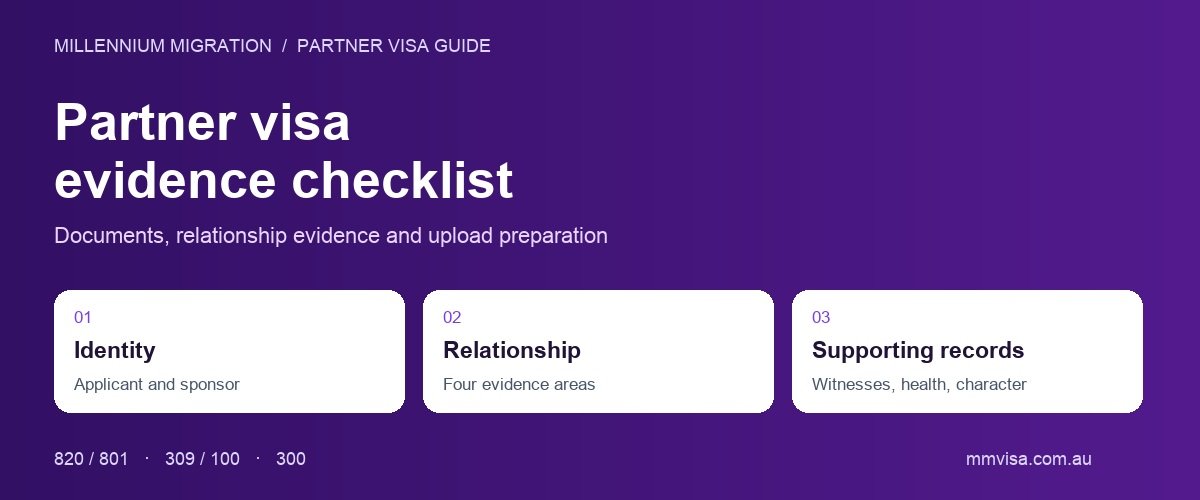
A good partner visa evidence checklist should do more than give you a pile of documents to collect. It should help you show Home Affairs, clearly and consistently, that you meet the requirements for your particular Partner visa pathway. This guide covers the main documents for Subclass 820/801, 309/100 and Prospective Marriage Subclass 300 applications,…
-
What Is Schedule 3? Plain-English Guide
A Schedule 3 partner visa case usually arises when someone applies for an onshore Partner visa but does not hold a substantive visa. This may include someone who overstayed, became unlawful, or is now holding a Bridging Visa E. Schedule 3 is part of the Migration Regulations 1994. Its official purpose is to set additional…
-
My Sponsor Said They’ll Cancel My Partner Visa” — What Happens?
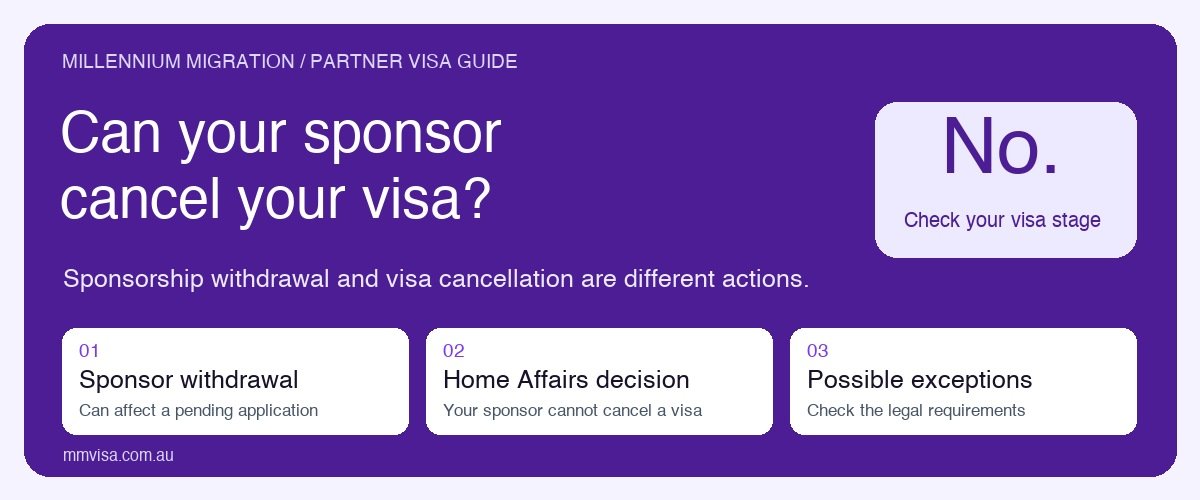
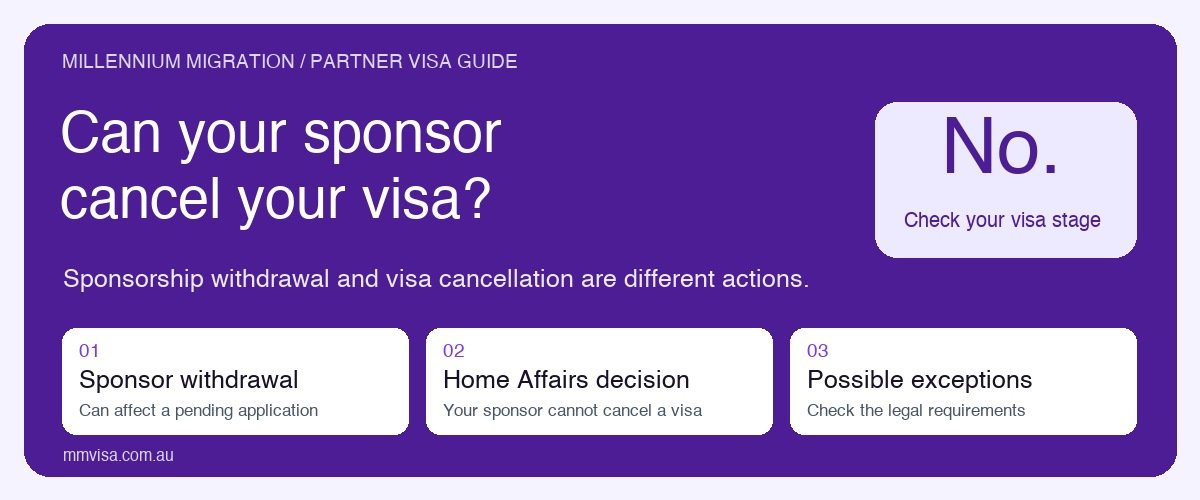
Partner visa cancellation threats can be frightening. Can your sponsor make your visa disappear simply because your relationship has broken down or you have had an argument? No. Your sponsor cannot personally cancel your visa. They can tell the Department of Home Affairs that the relationship has ended and withdraw their sponsorship or support. What…
-

November 2026 Visa Changes: 5 Essential Rules to Know
NOVEMBER 2026 VISA ROUND-UP Five visa updates.One month. Three are already in force. Two more dates to watch: 28 and 30 November. 1 NOVBridging visa B New applications restricted for pending Protection visa matters. In force 12 NOV407 Training visa Offshore application and grant for applications from this date. In force 13 NOV485 Graduate visa…
-
Applying for a Partner Visa With Children and Stepchildren
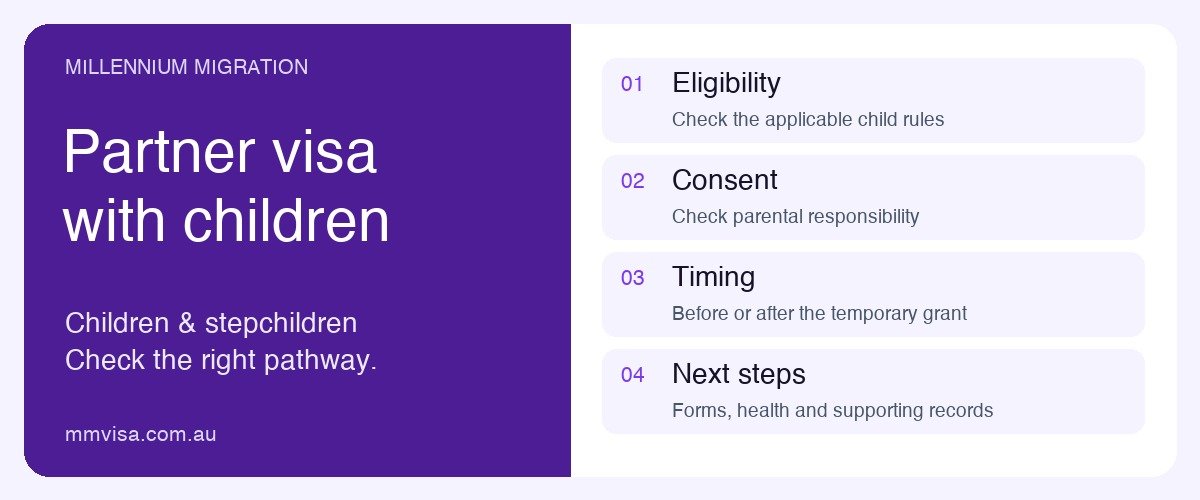
A partner visa with children involves checking each child’s eligibility under the particular visa rules. Home Affairs assesses their relationship to you, any dependency, health and character requirements, and permission to migrate for children under 18. Stepchildren can also qualify in appropriate circumstances. However, custody arrangements, the child’s age and the stage of your Partner…
-

482 Skills in Demand Visa: Complete Australia Guide 2026
Illustrative workplace photo, not clients or evidence of visa outcomes. Photo: ThisIsEngineering / Pexels. The 482 Skills in Demand visa — formally the Skills in Demand visa (subclass 482) — is Australia’s main temporary employer-sponsored skilled work visa. It allows an approved employer to sponsor a skilled worker where they cannot find a suitable Australian…
-
Partner Visa Hidden Costs: Your Ultimate Guide to Fees
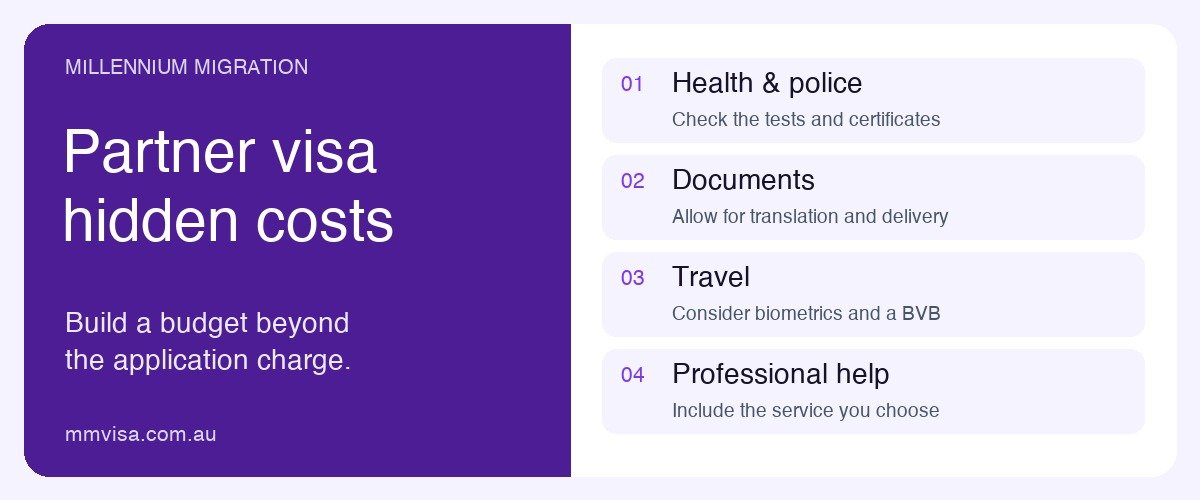
Partner visa hidden costs can easily be overlooked when couples budget for an Australian Partner visa. Most people focus on the government application charge, which is currently from $11,710 for most 820/801 and 309/100 applicants. But that is not necessarily your final cost. Medical examinations, police checks, translations, biometrics, relationship registration, travel and professional assistance…
-
The 12-Month De Facto Rule and Relationship Registration
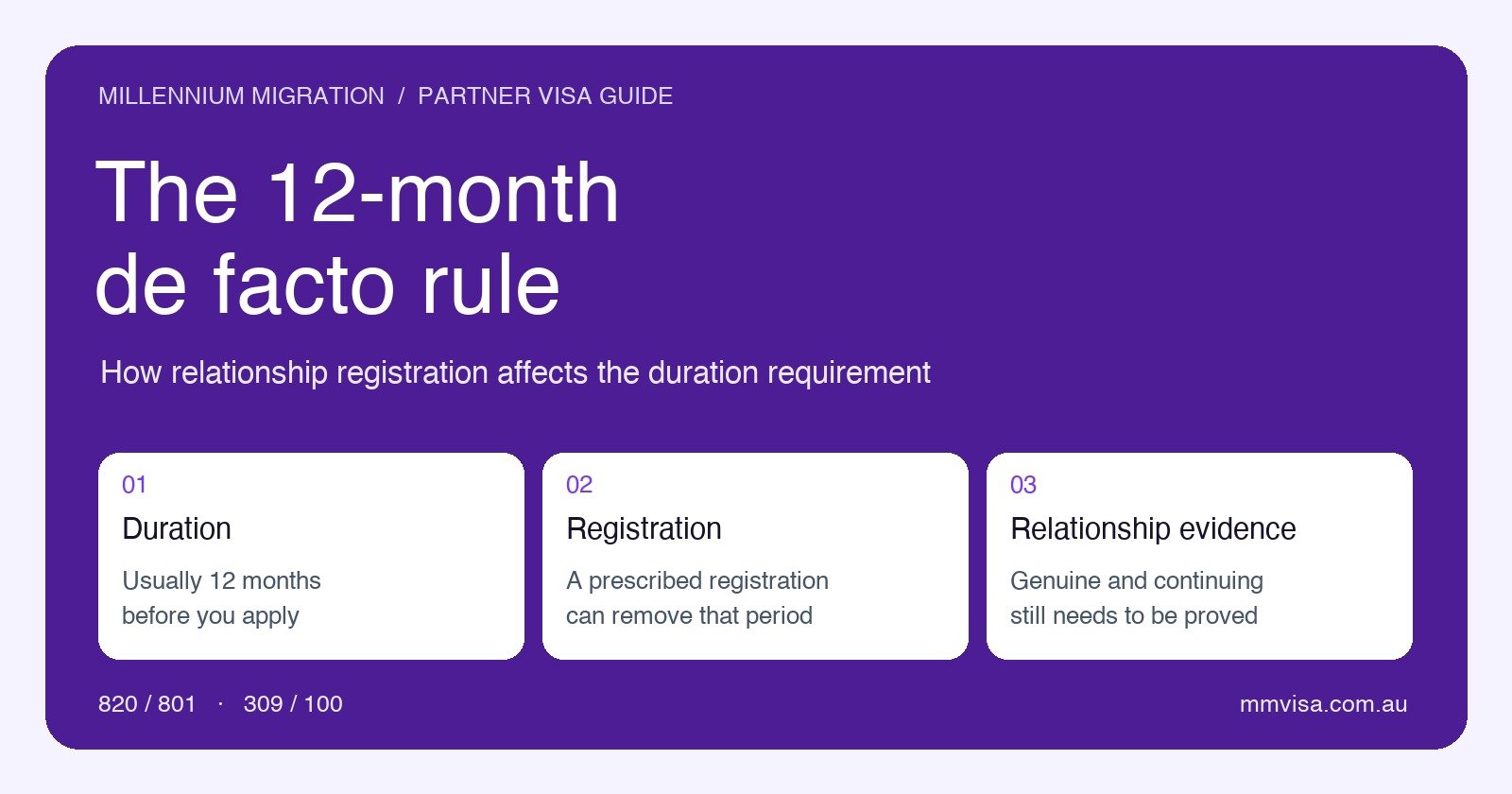
The 12-month de facto rule causes a lot of confusion for Australian Partner visa applicants. Many couples assume they must have lived together for 12 months before they can lodge a de facto Partner visa. Others believe registering their relationship means they no longer need relationship evidence. Neither explanation is quite right. For relevant Partner…
-

482 Sponsor Check: What to Do If Asked to Pay
Before you accept a job tied to a Skills in Demand visa, run a 482 sponsor check. If an employer or recruiter asks for a deposit, a cash payment or a cut of your wages in exchange for sponsorship, pause before signing or paying. Open the ABF sponsor register → What happened in the $540,000…
-
Decision-Ready Partner Visa Application: Complete Guide
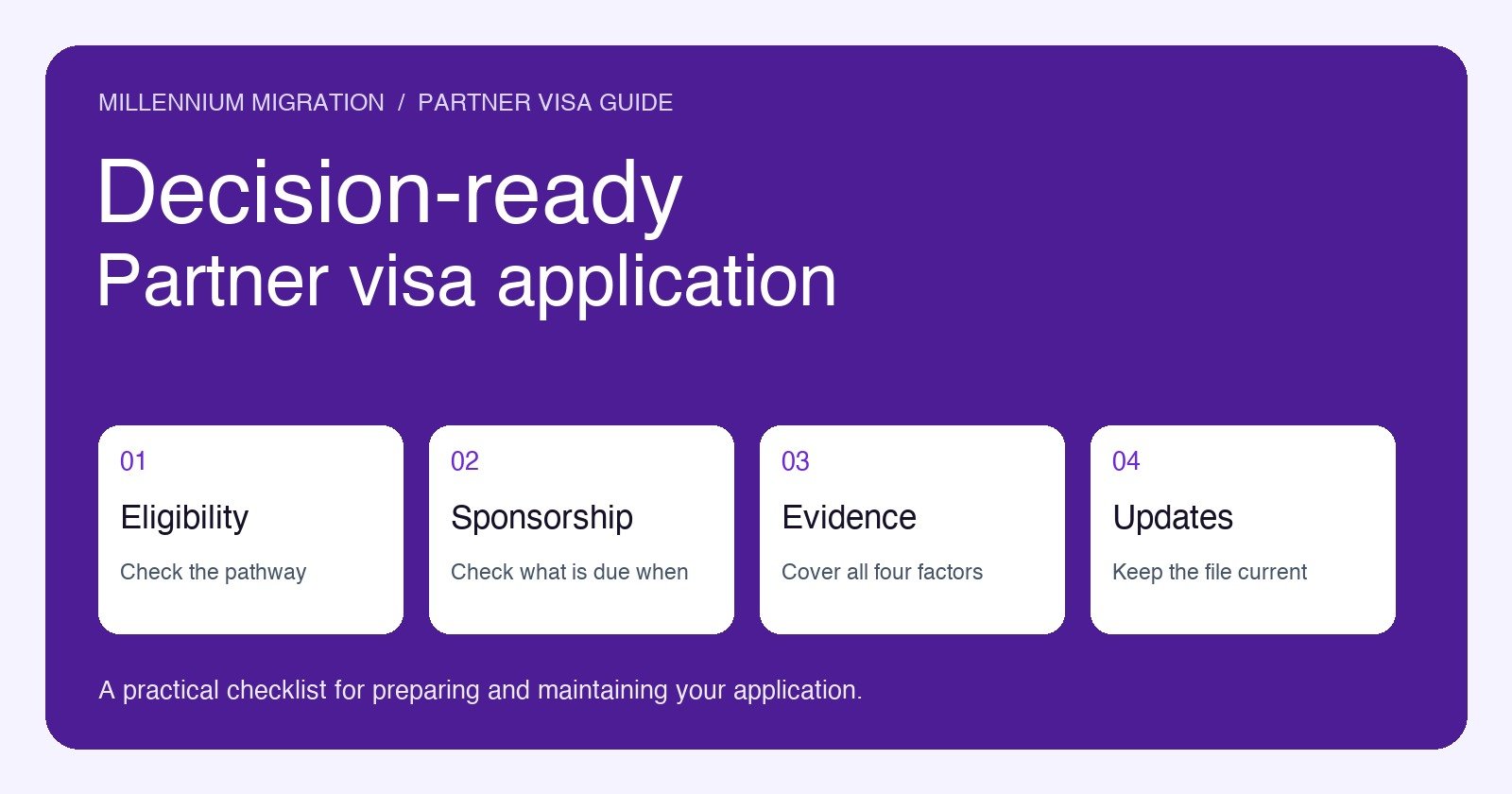
A decision-ready partner visa application is not a special visa category and it does not guarantee faster approval. It means giving Home Affairs the required documents and correct information so a decision-maker can assess the application without obvious gaps. Home Affairs’ family visa guidance calls this being “decision ready”. Missing relevant documents can cause delays…